Why Your Generic Tadalafil Keeps Changing Appearance — and How to Tell Normal From Not
Photo: generic tadalafil tablets different colors shapes pharmacy bottle, via www.laserdaisydesigns.co.uk
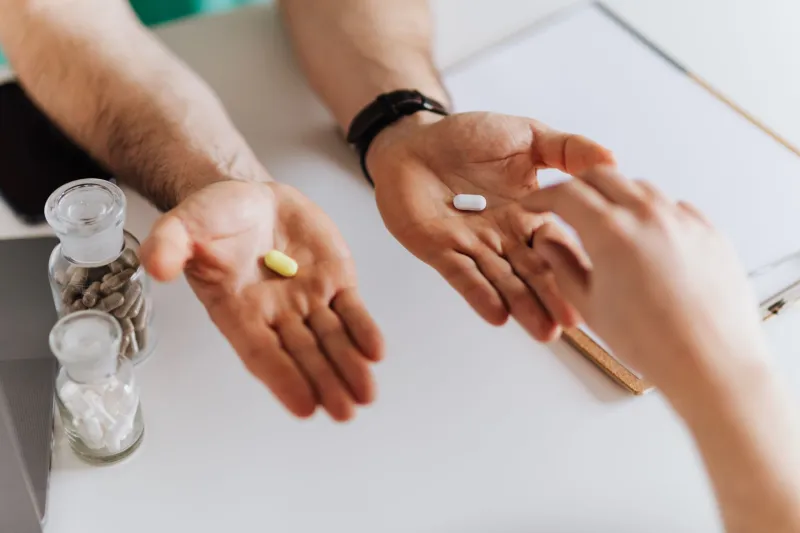
A patient opens a refill bottle and pauses. The tablet is a different color, a different shape, and carries an imprint he does not recognize. The label says tadalafil, the dose is unchanged, and the pharmacy is the same one he has used for years. Nothing looks wrong, exactly — it simply looks different. That moment of hesitation is reasonable. A chronic medication becomes familiar, and familiarity becomes a quiet form of trust.
Generic tadalafil is not a single, monolithic product. It is a category of products made by different manufacturers under separate FDA approvals. Understanding why those products can look unlike one another — and where the real safety questions begin — makes the refill counter far less mysterious.
Why generic tablets are not visual carbon copies
When the FDA approves a generic drug, it does not require the tablet to match the brand-name product in color, size, or imprint. It requires the generic to contain the same active ingredient, at the same strength, in the same dosage form, and to meet the same quality standards. The manufacturer must also demonstrate bioequivalence: that the generic delivers the active ingredient into the bloodstream at a comparable rate and extent.
That is a meaningful standard, but it is not a promise of physical sameness. Two tadalafil tablets can be bioequivalent and still differ in shape, coating, filler, binder, disintegrant, and coloring agent. The active molecule is the same; the surrounding formula is not necessarily identical.
The ordinary reasons a tablet changes
A pharmacy may switch generic suppliers for reasons that have nothing to do with quality. Supply contracts change, wholesalers run short, a manufacturer discontinues a presentation, or a plan prefers a different labeler. The pharmacist may hand over a bottle with a different national drug code — the NDC — because the pharmacy has moved from one approved generic to another.
Within the same manufacturer, a tablet can also change. Firms reformulate coatings, alter imprint designs, or move production between facilities. These changes are generally reviewed by the manufacturer and reflected in the product labeling, but they can surprise a patient who expects the same white oval every month.
What bioequivalence does — and does not — guarantee
Bioequivalence is generally demonstrated through studies comparing the rate and extent of absorption. For most generic drugs, the standard involves a 90% confidence interval for key measures such as AUC and Cmax falling within 80% to 125% of the reference product. In plain terms, the generic must behave closely enough to the reference product that the difference is not clinically meaningful for most patients.
It does not guarantee that every patient will experience the two products identically. It also does not guarantee that inactive ingredients will be the same. Most people tolerate differences in fillers and coatings without issue. A patient with a known sensitivity to a specific dye, binder, or coating ingredient may not. That is one reason a formulation change can matter even when the active ingredient and dose have not changed.
When a different-looking pill is normal
A new color, a new imprint, or a switch from round to oval is usually unremarkable if three things are true: the bottle came from a licensed US pharmacy, the label matches the prescription, and the tablet contains the prescribed strength of tadalafil. The pharmacist should be able to tell you the manufacturer, the NDC, and whether the pharmacy changed suppliers.
It is also normal for the same generic product to look different from a photograph online. Pill-identification sites are useful starting points, but they are not authoritative for every manufacturer and every revision. The pharmacy's dispensing record is the better source.
When a change deserves a phone call
Call the pharmacist before taking an unfamiliar tablet if the bottle or blister pack looks tampered with, the imprint is missing or illegible, the tablet is chipped or crumbly, or the label and the tablet do not seem to correspond. Call if you ordered from an online source and cannot verify the seller's state licensure or the product's NDC. Call if a new refill produces a noticeably different side-effect profile — not because a different appearance proves a problem, but because a formulation change is worth documenting with the pharmacist.
Counterfeit products are a separate concern from legitimate generic variation. They are most likely to appear through unverified online sellers, not through a licensed US pharmacy that can trace its supply. The practical safeguard is not memorizing every tablet shape. It is using a legitimate dispensing channel and asking direct questions when something looks unfamiliar.
How to verify a tablet without turning it into a research project
Ask the pharmacist for the manufacturer name and NDC. Compare that information with the label. If you have the previous bottle, compare the NDCs. If the pharmacy has changed suppliers, ask whether the new product is an approved generic tadalafil and whether the dose is unchanged. If you have had a reaction you suspect is tied to a new formulation, report it to the pharmacist and consider filing a report with the FDA's MedWatch program.
Do not split, crush, or double up on tablets to compensate for a change in appearance. Do not assume a tablet is counterfeit solely because it looks different, and do not assume it is legitimate solely because it looks familiar.
The bottom line
Generic tadalafil can legitimately change appearance between refills. Bioequivalence addresses drug exposure, not cosmetic identity, and inactive ingredients may vary among approved products. The useful question is not “Does this pill look exactly like the last one?” but “Can my pharmacist verify what this is, where it came from, and why it changed?” A brief conversation at the counter is usually enough to replace uncertainty with a clear answer.